Six Bedrooms That Work After the Photograph Is Taken
Six bedrooms examined for the hours that matter: getting up in the dark, storing the extra blanket, reaching a book and walking around the bed without bruising a shin.
Written by Vestados Editorial · 2 July 2026
Affiliate disclosure: some links earn us a commission if you buy something, at no extra cost to you.
A bedroom photograph is taken at the easiest moment of the day. The duvet is smooth, the curtains are open and nobody is looking for a charger in the dark. The useful test begins later. Can you reach the bathroom without clipping a bed corner? Does the reading light work for two people? Is there somewhere to put the blanket when the room warms up at night? The six rooms below each make a strong visual decision, but appearance is only the starting point. Some moves survive daily use. Others need more planning than the photograph admits. Measure the mattress first, then the full frame, the open drawers and the route around them. Bed labels are especially unreliable across borders. A European double and an American full are not the same object. Tape the entire footprint on the floor and live with it for a day before ordering anything large.
A low bed trades visual calm for a harder morning
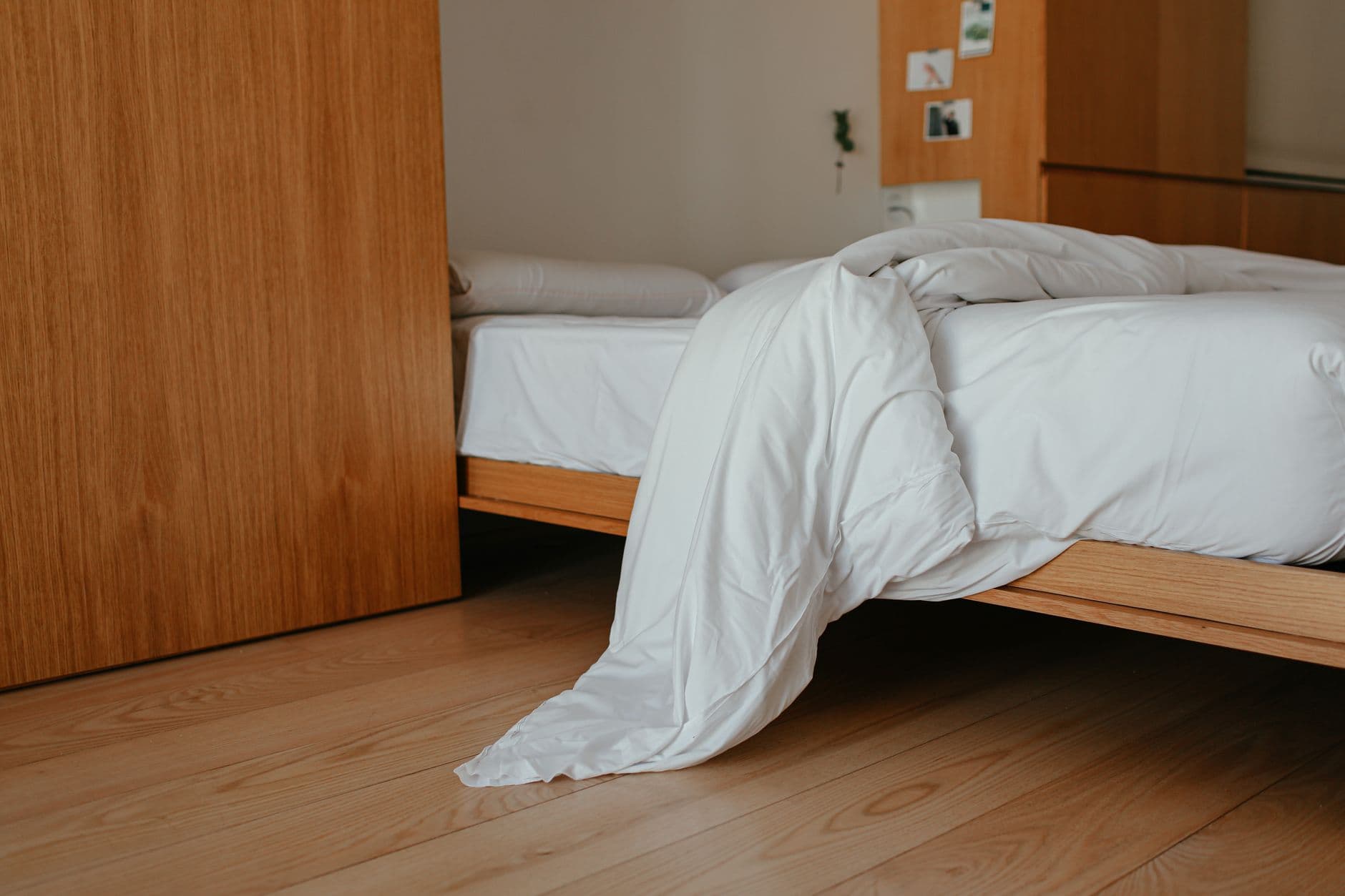
The first bed sits close to the floor and leaves more wall visible above it. That can make a modest ceiling feel less crowded. The compromise arrives when you stand up. A low mattress asks more from knees and hips, and the wide timber ledge shown here creates a corner exactly where bare feet travel at night. Test the finished mattress height, not the frame in an empty showroom. Sit on the edge with both feet flat, stand without pushing off and repeat the movement as if you had just woken up. Then measure the frame overhang beyond the mattress. A generous ledge can hold a book, but it also consumes the walking route and complicates fitted sheets. Check how air reaches the underside of the mattress and how the floor will be cleaned. If the frame blocks a vacuum head, dust will collect where it is hardest to reach. Low works best when the room has enough floor around it and the people using it enjoy the movement it demands.
A wall-sized headboard needs an electrical plan
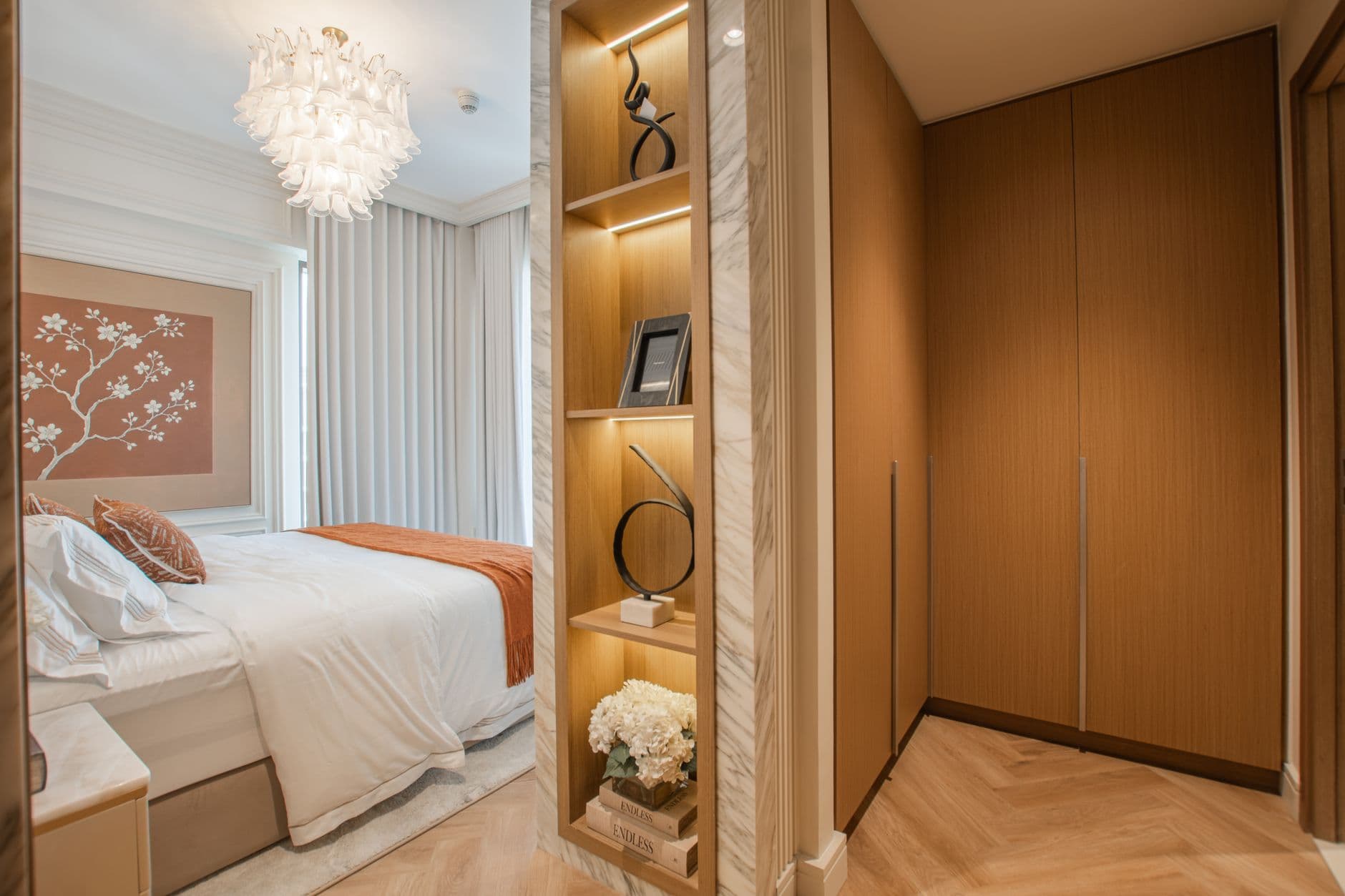
The timber panel in the second room gives the bed a permanent place in the architecture. It also fixes the position of almost everything behind it. Bedside sockets, switches, reading lights and cable routes need to be set before the last panel is fitted. Start with the exact mattress and frame width, then mark both on the wall. Add the nightstands and check where a hand naturally reaches from the pillow. A light centred on the furniture drawing may sit awkwardly once a deep mattress and several pillows are in place. If the panel uses narrow battens, decide how sockets and access covers will interrupt the rhythm. Removable sections are less glamorous on a rendering and far kinder to the electrician who returns later. Think about the next bed too. A panel designed tightly around a 160 cm mattress can look wrong after a move to 180 cm. Wider panels offer flexibility, provided the reading lights can move or work across both sizes. Architecture should make the bed easier to use, not trap the room in one purchase.
One surface can calm the room if it can still be repaired
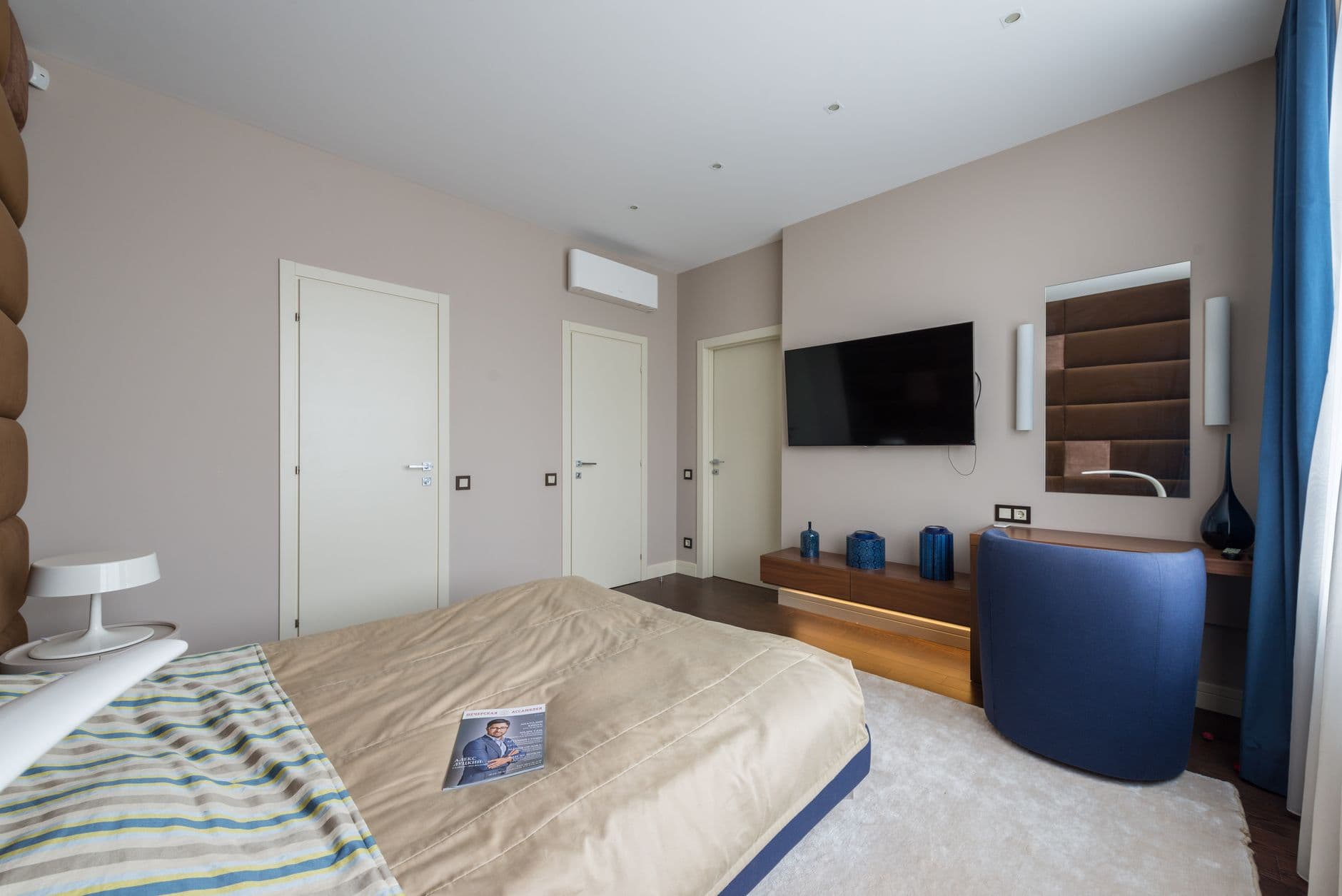
The third bedroom carries a pale mineral finish across walls, niches and curved junctions. The absence of sharp colour changes lets daylight show the shape of the room. It is a persuasive effect, yet continuous finishes expose every later patch. Before specifying plaster, limewash or microcement, ask how the surface handles a knocked suitcase, a replaced socket and a hairline crack. Keep the product name, colour reference, batch information and applicator's method with the house records. A small labelled sample board is more useful than a photograph when a repair is needed. The finish should also stop somewhere sensible. Skirting protects the wall from vacuum heads and cleaning water; removing it transfers that job to the wall coating. A recessed or flush detail can keep the quiet line while still taking wear. Near the bed, test the surface against skin and fabric. A heavily textured wall beside pillows may mark bedding and catch dust. Material continuity is convincing when maintenance has been designed into it.
Blackout succeeds or fails at the edges
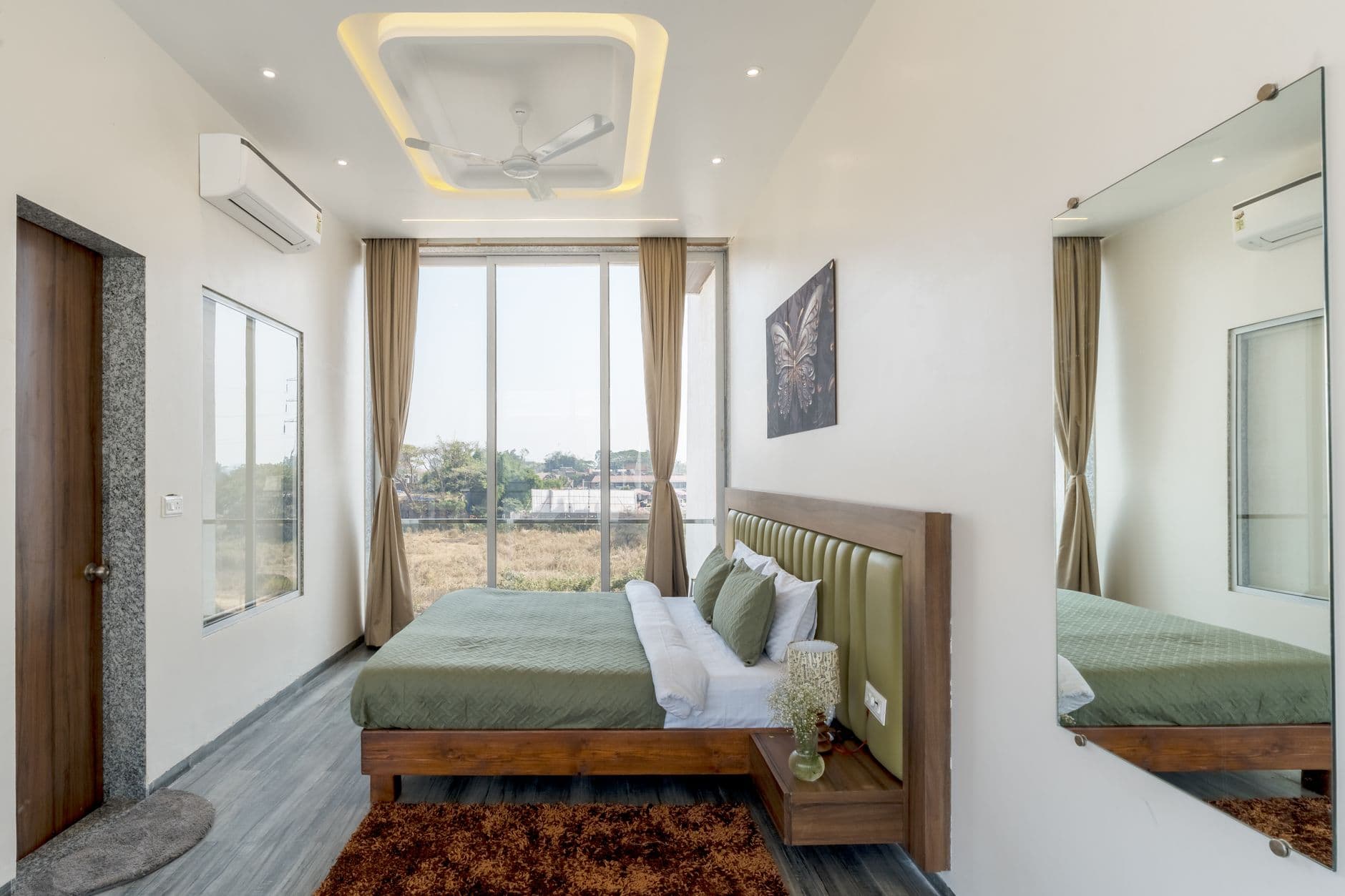
A blind can be made from excellent blackout fabric and still leave a bright outline around the window. The fourth room hides the top mechanism in a ceiling recess, which removes one common leak and keeps the glass visually clean during the day. The sides and sill still need attention. Measure the opening at several points because walls are rarely perfectly square. Outside-mounted blinds overlap the opening; recessed blinds need side channels or carefully controlled gaps when near darkness matters. Curtains need enough return at the wall and enough fabric to close without pulling tight. Decide how the window will open, where condensation can be inspected and how a motor or track will be serviced. A concealed system that requires plaster removal for a repair is unfinished design. Test the proposal at midday with temporary fabric before building the recess. And keep a manual route out where local fire-safety rules require it. Darkness should support sleep without making the window difficult to use.
A bench must earn the space at the foot of the bed
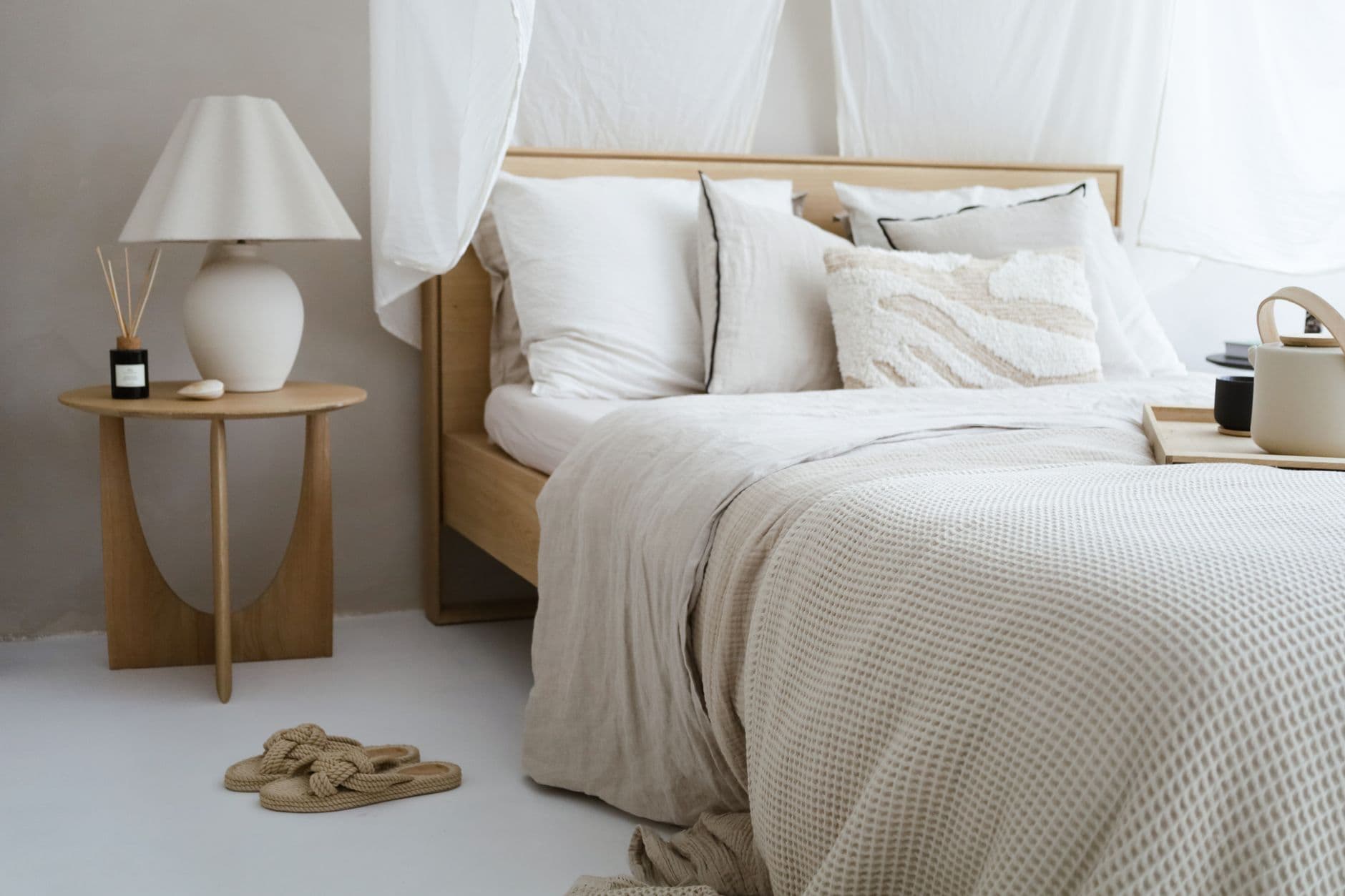
The bench in the fifth room gives a blanket somewhere to go and provides a seat for shoes. Those are real jobs. It also lengthens the bed's footprint and can turn the route to a wardrobe into a squeeze. Mark the bed and bench together, including any projecting legs. Open every nearby drawer and door. Then walk the route carrying a laundry basket. In accessible hotel guest rooms covered by U.S. standards, a clear floor space is required beside the bed for a parallel approach. A private home may follow different rules, but the principle is useful: furniture should not consume the space a body needs to approach and transfer. If the bench only holds decorative cushions at night, a wall hook, chair or blanket chest elsewhere may use the floor better. When a bench stays, its width does not have to match the mattress exactly. A shorter piece can expose the corners of the bed frame and reduce bruised shins. Choose its length by movement first, then adjust the composition.
The nightstand should hold the untidy parts of sleep
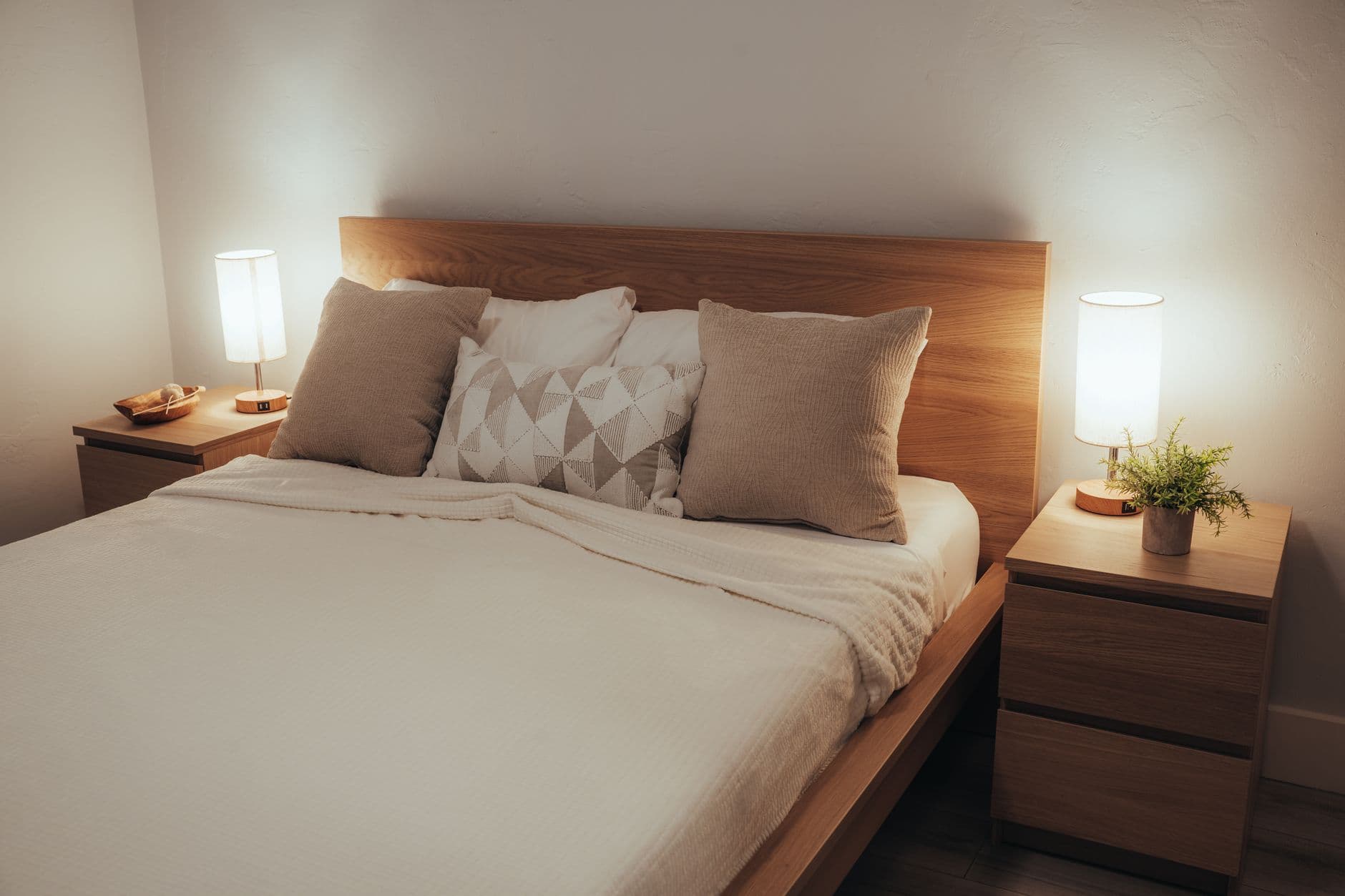
The final image offers a small table, one lamp and almost nothing else. It is pleasing because someone removed the evidence of ordinary nights before the camera arrived. Most people need water, glasses, medication, a book, tissues and a charging cable within reach. Hiding those things is a storage problem, not a matter of willpower. List what genuinely arrives beside the bed for a week. Then choose a drawer, shelf or wall pocket that fits it. Set the top close to the compressed mattress height so a hand can find the edge without reaching down blindly. The lamp switch should work from bed, while the shade must keep the bulb out of a reclining person's direct view. For two sleepers, separate controls prevent one side from lighting the whole room. Route charging cables so they cannot fall behind the table or cross the walking path. A nearly clear surface is possible, but it comes from giving the necessary clutter a precise home within arm's reach.
Choosing the bedroom's anchor piece?
LoomLan currently carries bedroom furniture including beds, nightstands and bedroom benches. The tracked link opens LoomLan; verify room, frame and mattress dimensions, mattress compatibility and support requirements, materials and finish, stock, delivery access and the current return terms before ordering. If you choose a clearance item, LoomLan states that clearance sales are final.