Natural Stone at Home: What to Put Where
Marble, travertine, limestone and quartzite ask different things of a room. This is how to choose the right stone, finish and place before the cutting starts.
Written by Vestados Editorial · 2 July 2026
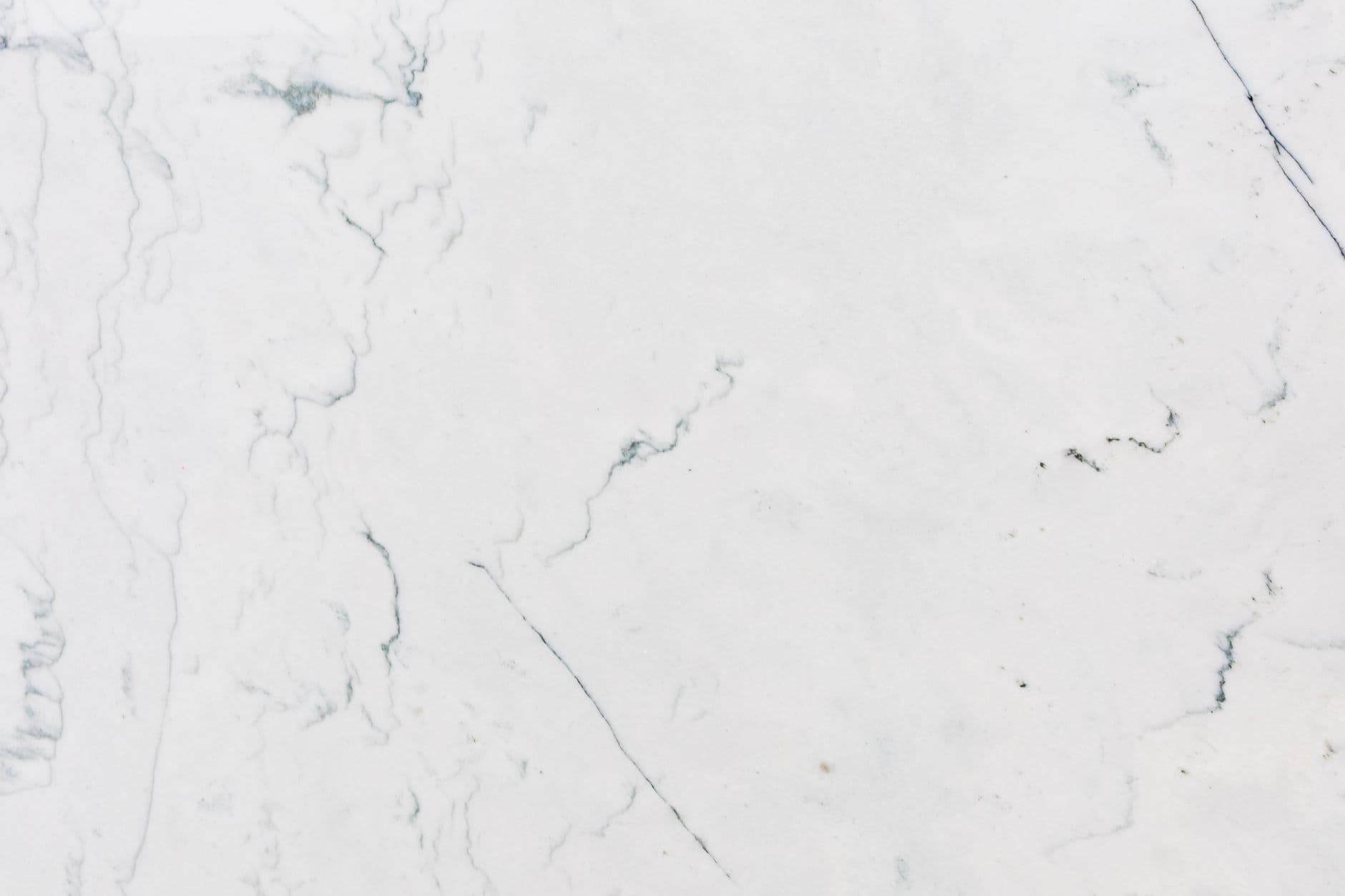
A stone sample is a promise made under flattering showroom lights. The finished room is less forgiving. Lemon reaches the worktop. Shower water finds the smallest weak point. Winter follows a terrace slab indoors. Veins meet corners that looked simple on a plan. None of this makes natural stone a bad choice. It makes it a material that needs a job description. Begin with the room, the traffic and your tolerance for visible change. Then choose the geological family, the finish and the exact batch. The right question is not which stone looks most luxurious. It is which stone can do the work you are asking of it and still look better after years of use.
Choose the job before you choose the slab
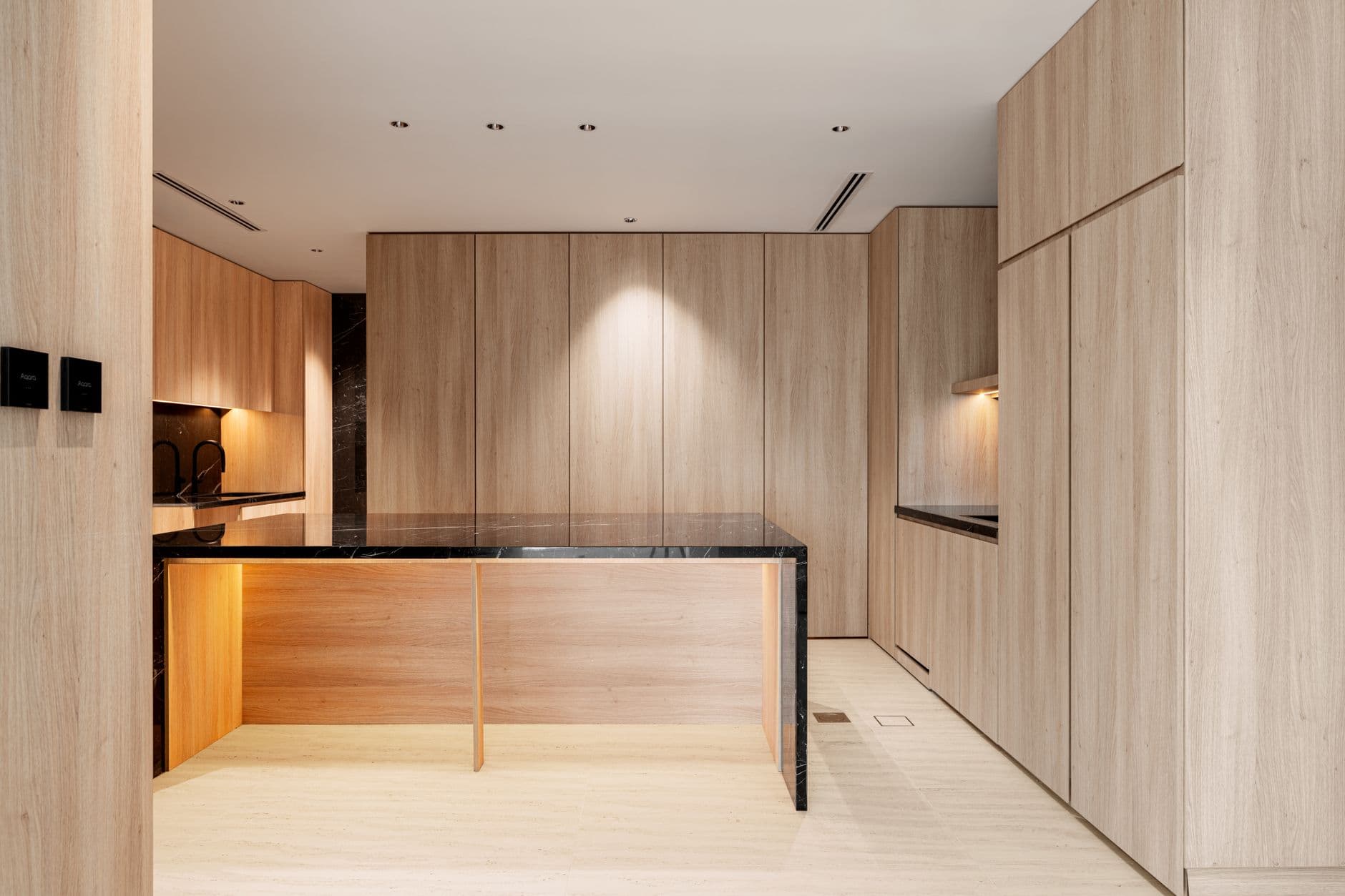
Start with a short list of demands. A kitchen island takes oils, citrus, hot pans and people leaning on its edge. A bathroom wall mainly needs sound detailing and a cleaner that will not attack the surface. A hall floor must cope with grit carried in from outside. The same pale stone can be sensible in one place and a source of constant anxiety in another. Bring a plan, photographs and measurements to the stone yard. Ask which face will be visible, where joins are unavoidable and how the fabricator will support overhangs and cut-outs. If a floor continues toward a terrace, discuss the outdoor section as a separate technical specification. Only a limited group of limestones has a proven record in freeze-thaw paving. Matching colour across the threshold matters less than choosing an exterior finish and stone that can survive the climate.
Marble is beautiful because it records use
Marble contains calcite, which reacts with mild acids found in citrus, wine and many household products. The pale mark left behind is an etch, not a stain sitting on top. No impregnating treatment can make that chemical reaction disappear. This is the decision buyers need to make plainly. Some people want a pristine black mirror and will resent the first ring. Others like a honed marble counter because the small marks settle into a soft, lived surface. Both positions are reasonable. Pretending the material will behave like engineered quartz is not. For a busy cook who dislikes patina, move marble to a splashback, vanity, fireplace or side table. If it stays in the kitchen, choose the slab in person, keep an offcut, use boards and trivets, and accept that professional refinishing may be part of its long life.
Honed is not automatically the practical finish
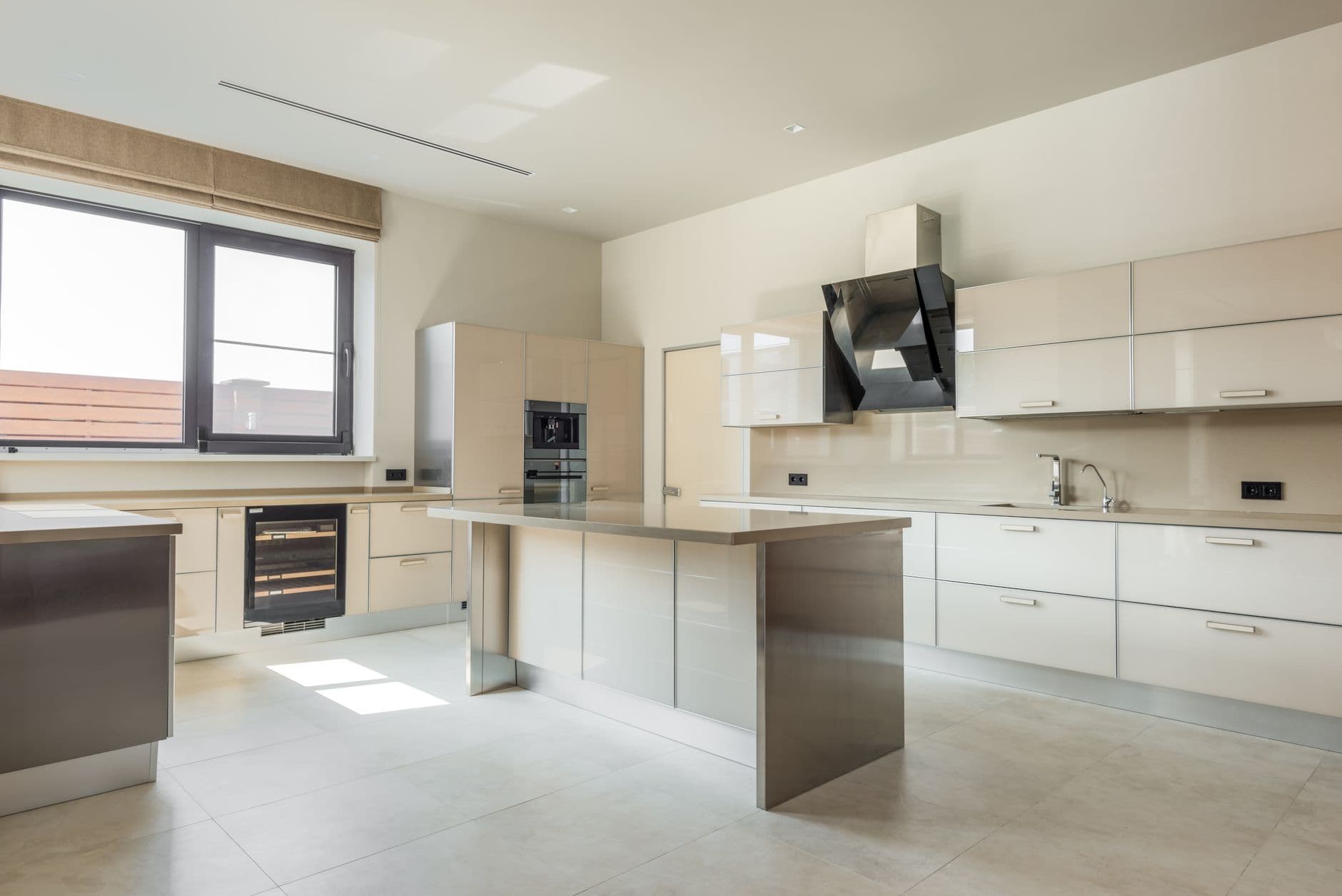
A honed finish cuts glare and makes strong veining feel calmer. It can also show oils and fingerprints differently from a polished surface. Polishing closes neither pores nor every maintenance question. The right finish depends on the stone, where it sits and what touches it. Ask to see a large honed and polished sample from the same material, then test both with water, oil and the cleaner you actually use. For a shower floor or entrance, appearance comes after grip. Request slip-resistance information for the exact finish in wet conditions, especially where local building rules apply. On walls and vertical fireplace surrounds, grip is irrelevant, so a polished finish can be used for light and depth without creating a walking hazard. Finish is a design tool, not a universal quality ranking.
A good floor starts with the batch on the ground
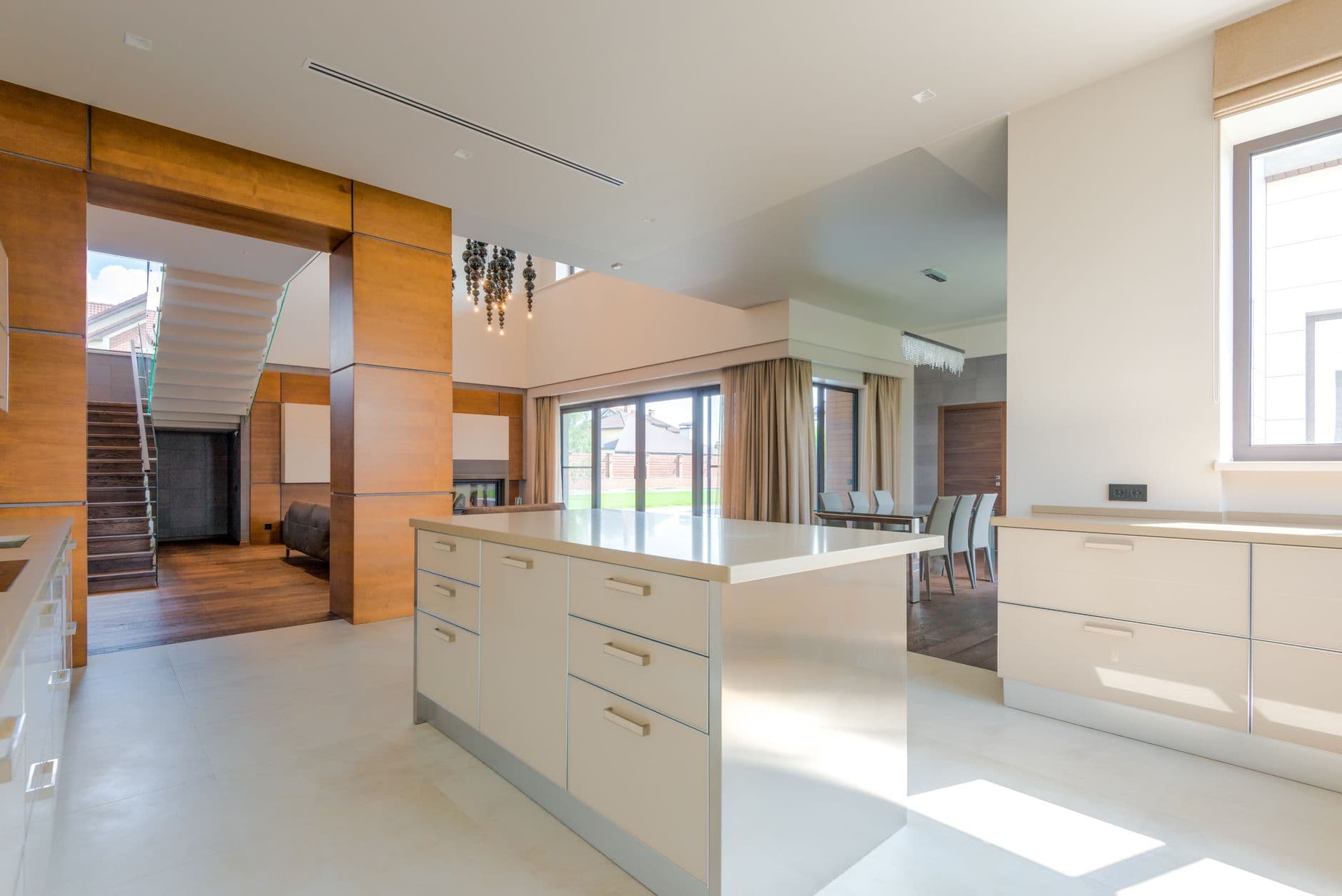
Natural variation becomes far more visible across forty square metres than it does on one sample tile. Before installation, open several crates and dry-lay enough pieces to see the real colour range, fossils, veins and filled areas. Move unusually dark or active pieces to places where they look deliberate. Agree the grout width and colour on a mock-up rather than from a chart. Large formats reduce the number of joints, but they demand a flatter substrate and careful handling. Underfloor heating adds another layer: the assembly, movement joints, adhesive and heating protocol must be designed together. Near an outside door, use a proper mat to catch grit. Sand is an abrasive, and a beautiful limestone floor will show the routes people walk if daily dirt is allowed to grind into it.
Wet rooms need details that a photograph hides
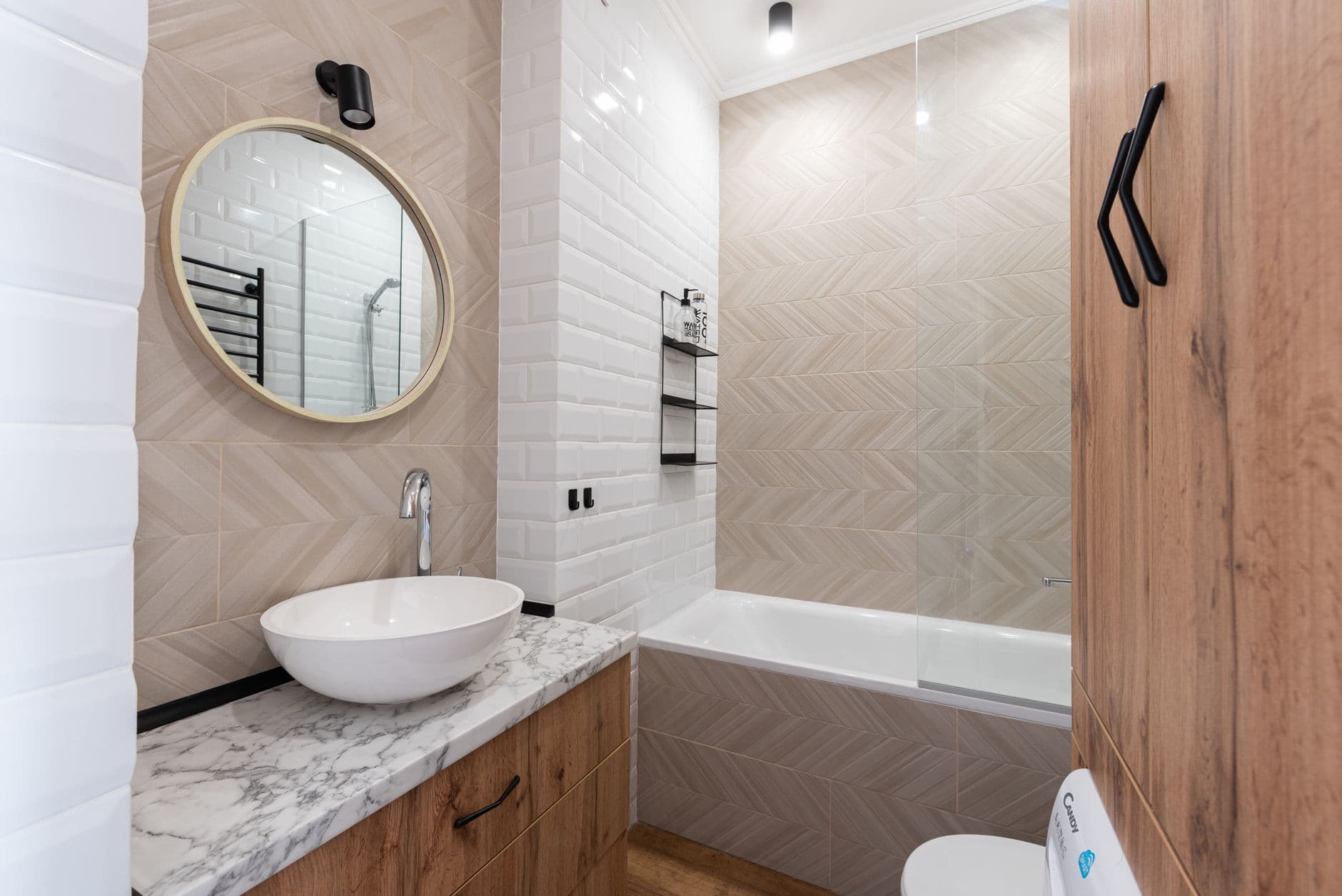
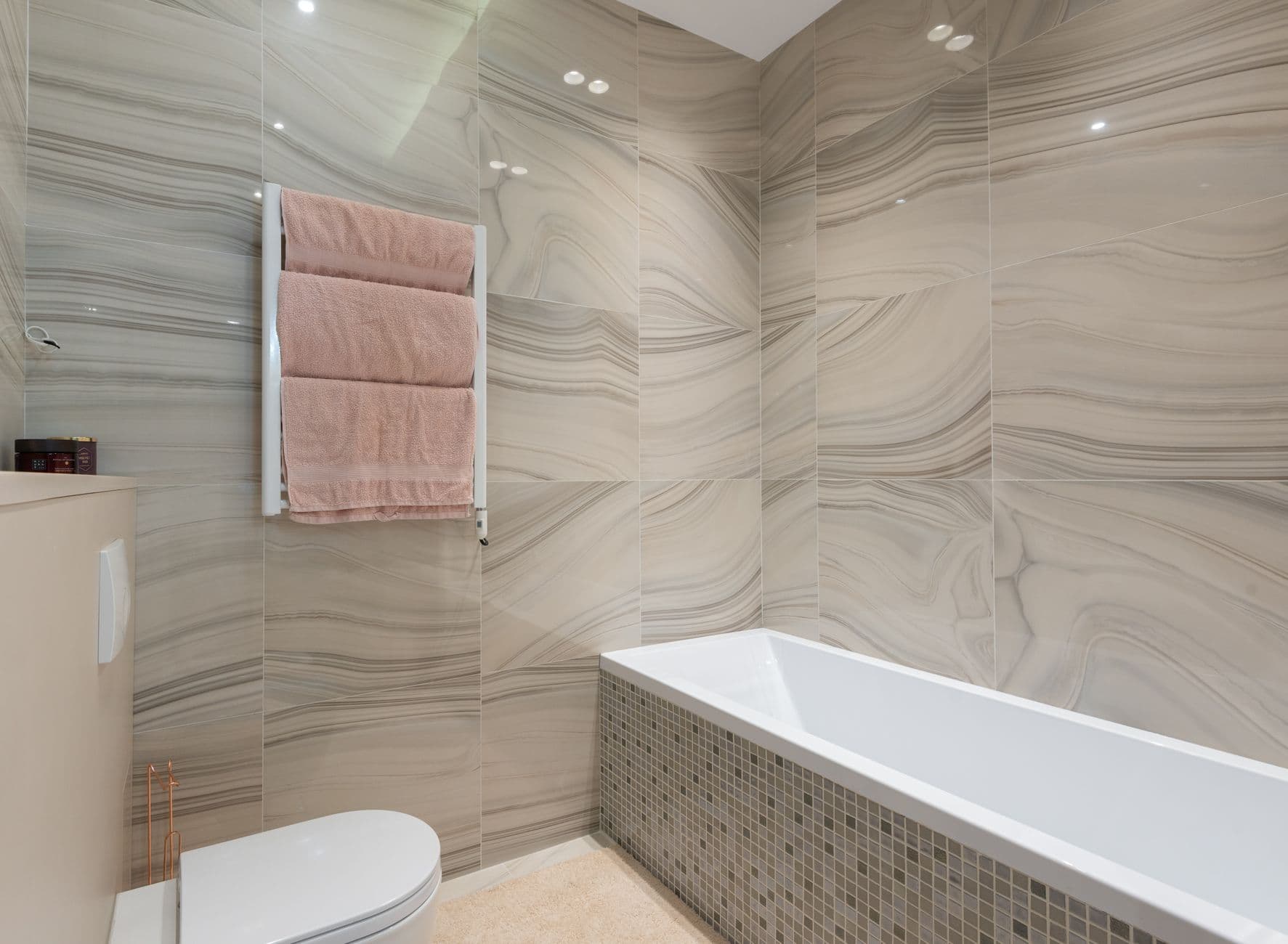
A stone-lined shower can be serene, but the stone is only the visible layer. Waterproofing, falls, drainage, movement joints and compatible setting materials decide whether the room remains sound. Ask the installer how the floor reaches the drain and how changes of plane are treated. A large slab may reduce grout lines on the wall while creating an awkward slope on the floor. Smaller pieces can follow the fall more easily. Check that the chosen stone, finish and filler are approved for the exact wet application. A topical coating that changes the surface is not a substitute for proper waterproofing below. After use, a squeegee limits soap and mineral build-up. For cleaning, choose a non-acidic product intended for natural stone and avoid the assumption that a bathroom spray is harmless simply because it is sold for showers.
Buy the exact material, then keep its paperwork

Stone names travel badly. A commercial label may group materials by appearance or expected behaviour rather than strict geology. Ask the supplier to identify the stone, quarry or source, finish, treatment and recommended applications in writing. Keep the technical sheet, care instructions, batch reference, grout details and one labelled offcut. Photograph the slab layout before cutting, with tape marking the sink, joins and exposed edges. If an impregnating treatment is recommended, record the product and application date. It makes stone more resistant to liquid entering the surface, not stain-proof, and the manufacturer should set the renewal interval. This small archive is useful years later when a cleaner, restorer or new owner needs to know what is installed. Good stone work is expensive. A folder of precise information is a modest way to protect it.