How to style a bookshelf worth slowing down for
A calm, practical take on how to style a bookshelf for a modern European home, built on natural materials and restraint.
Written by Vestados Editorial · 5 July 2026
Affiliate disclosure: some links earn us a commission if you buy something, at no extra cost to you.
A well-styled bookshelf should still work as a bookshelf. Begin with the books, records or files the piece must hold, then use the remaining space to make the whole wall feel calm. That order matters: styling around real storage needs produces a room you can maintain, while styling an empty shelf for a photograph usually creates clutter as soon as daily life returns.
The practical sequence is simple: measure the room and access route, choose the right kind of shelving, place the heaviest books safely, establish a visual rhythm and add only a few objects that have enough space around them. You do not need matching book spines, a shopping list of ornaments or a perfectly symmetrical arrangement.
Measure the room before you style the shelves

Record the available wall width, ceiling height and maximum useful depth. Check skirting boards, radiators, sockets, switches, vents and the swing of nearby doors. Mark the proposed footprint with painter's tape and keep the main walking route comfortable. For a tall piece, also measure every doorway, stair turn and lift between the entrance and the final room; the product dimensions alone do not tell you whether delivery is possible.
Choose a bookcase or an etagere on purpose
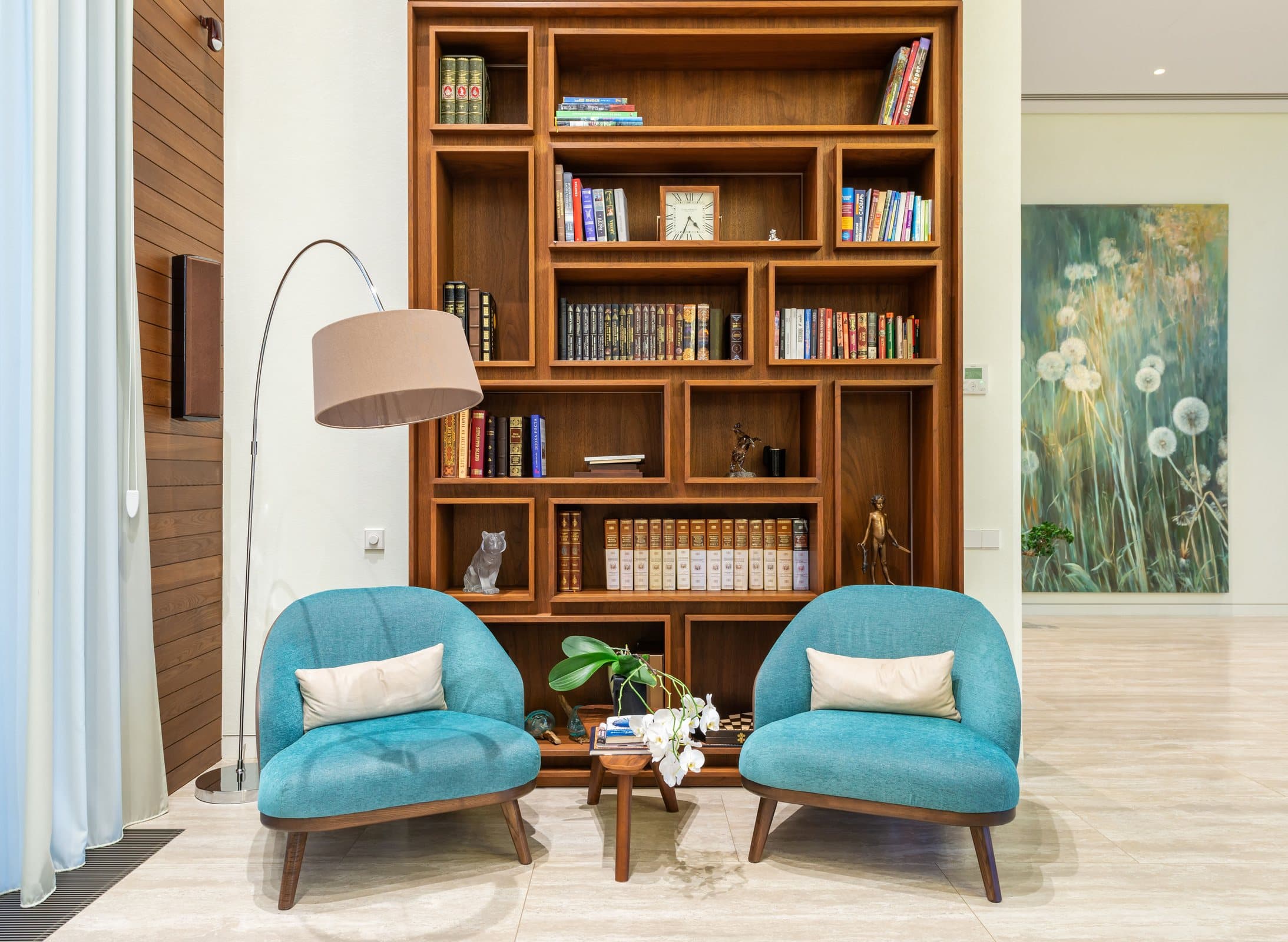
A backed bookcase gives books visual weight and can hide the wall behind it. An open etagere feels lighter, lets wall colour show through and may work as a room divider, but it exposes cables and objects from more angles. Closed lower doors are useful for paperwork, games or equipment that would otherwise look busy. Decide which job matters before comparing finishes; a beautiful open frame is still the wrong purchase if most of what you own needs to be concealed.
Start with the books you actually use

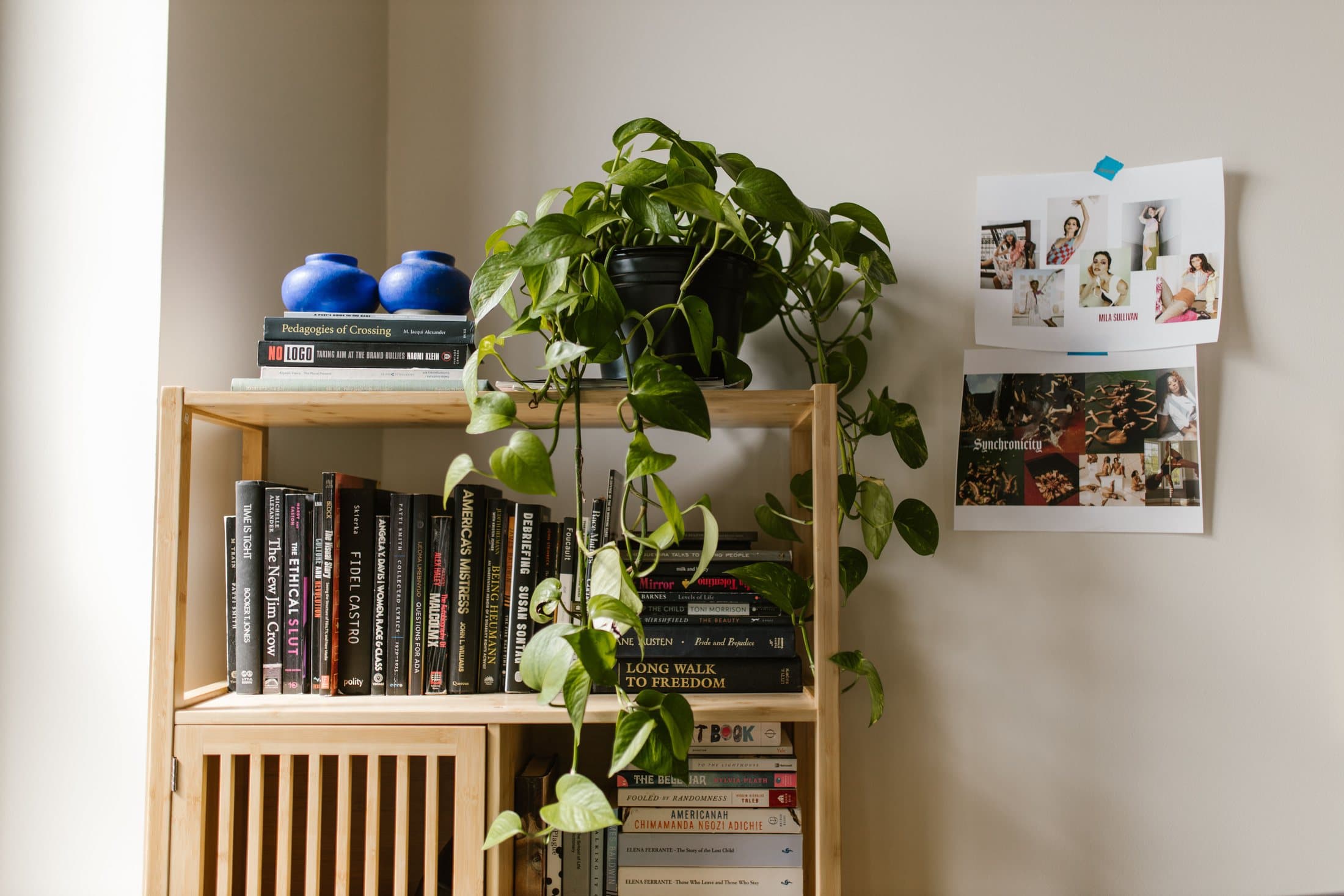
Sort books into rough groups by use or subject before placing them. Put large and heavy volumes on lower shelves, keep regularly used titles within easy reach and leave fragile books away from direct sun, damp walls and heat sources. Short upright runs are easier to use than one tightly packed row. A horizontal stack can support a small object or interrupt a long line, but do not use unstable piles as bookends and do not exceed the manufacturer's stated shelf load.
Build a repeatable shelf rhythm
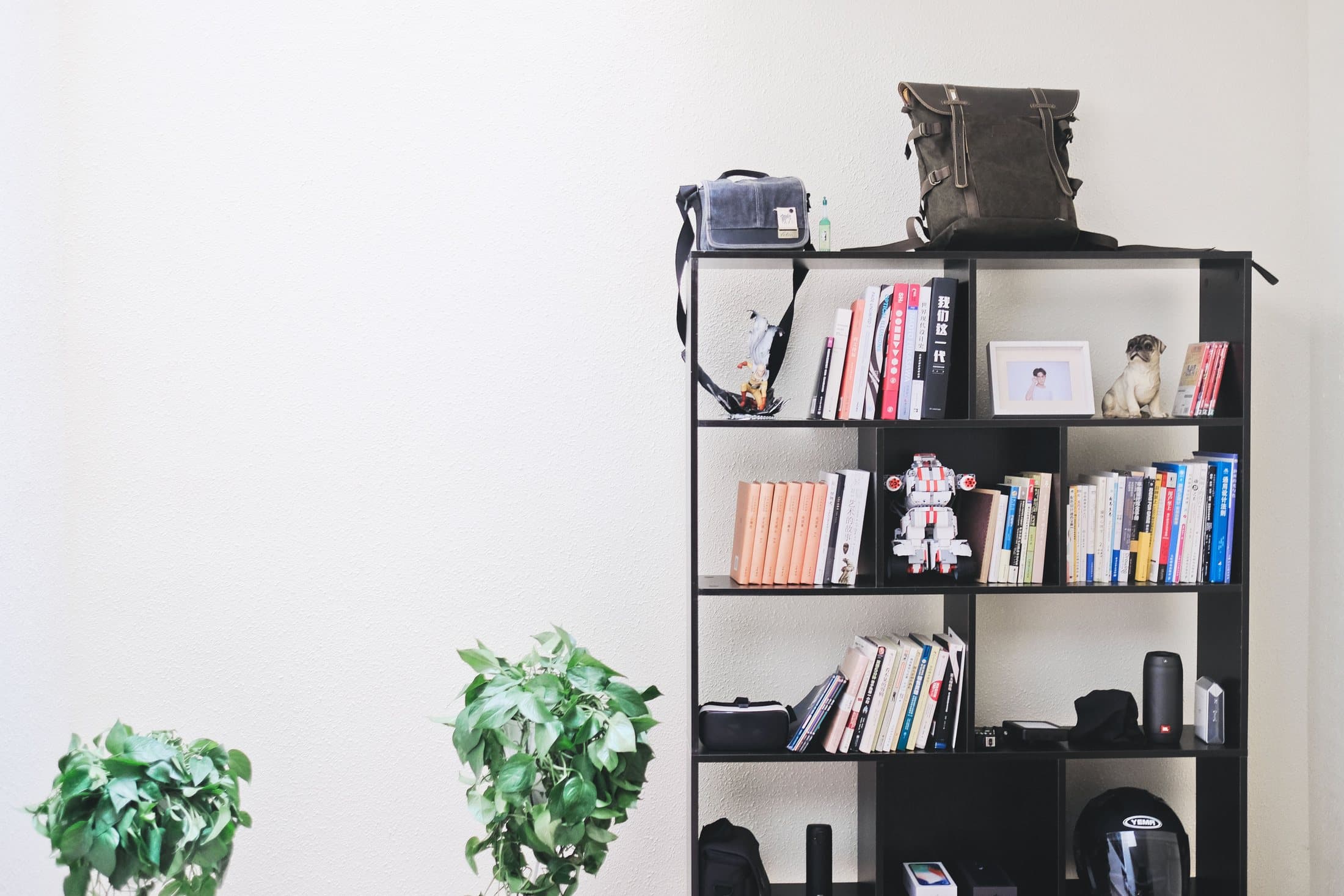
Work from the largest visual masses to the smallest. Balance a dense run of books on one shelf with a quieter area above or beside it, then repeat one or two colours or materials across the height of the unit. Step back after each shelf. The aim is not mirror symmetry; it is an even distribution of weight, empty space and contrast so one corner does not pull the whole arrangement off balance.
Add objects without turning the shelf into storage

Choose objects that relate to the shelf depth and to something already in the room: one ceramic piece, a framed work, a box for small items or a plant suited to the available light may be enough. Keep items away from the front edge, avoid blocking book access and leave some sections deliberately open. If every gap needs another purchase, stop; moving or removing an object usually improves the composition more than adding one.
Check load, stability and delivery before buying
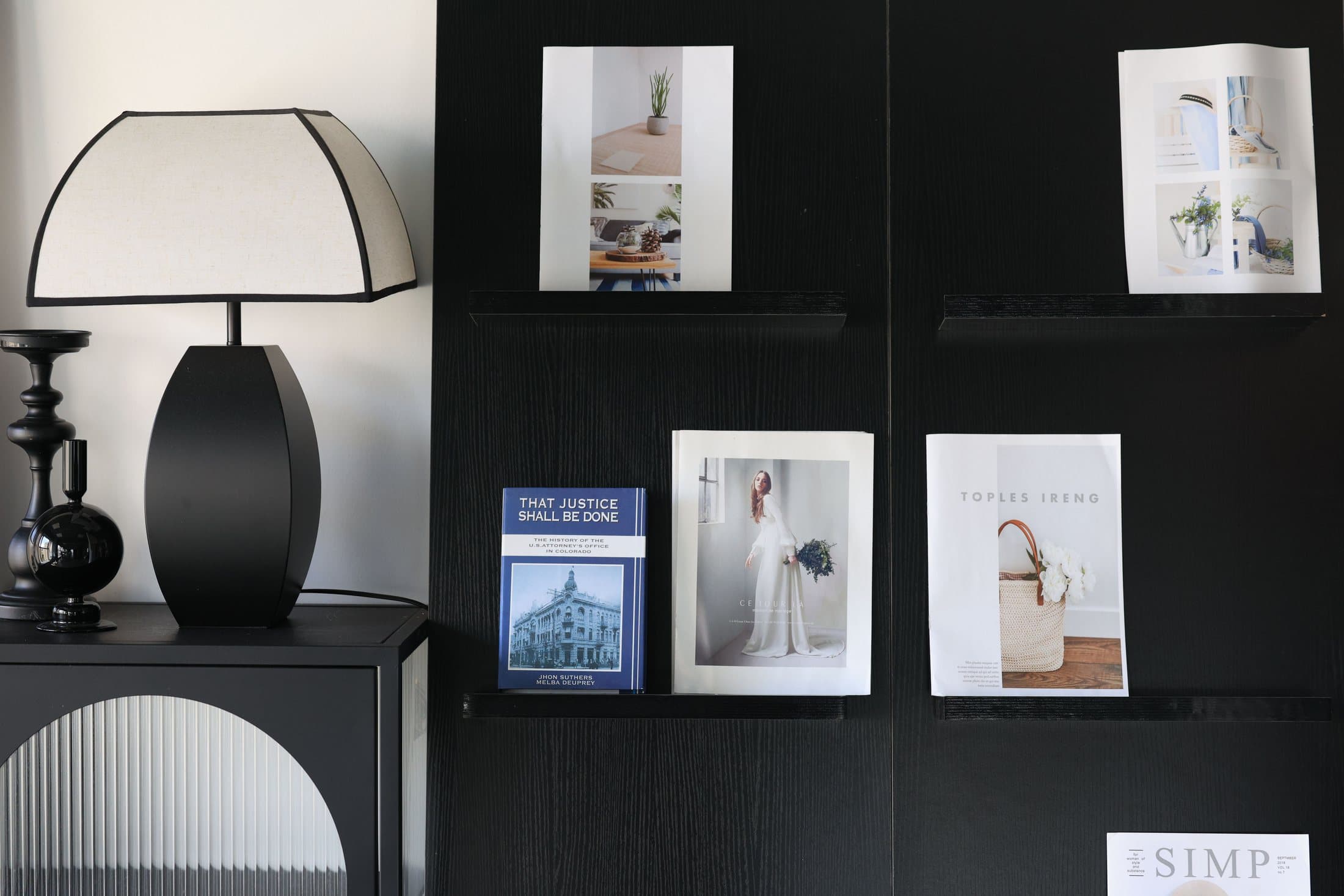
Books are heavy, so shelf capacity and anti-tip guidance are functional requirements rather than fine print. Confirm whether shelves are fixed or adjustable, how the back and frame resist racking, whether levelling feet are included and what anchoring the maker requires. Use fixings suited to the actual wall construction, keep the heaviest load low and seek qualified help when the supplied hardware or wall type is unclear. Recheck fasteners after assembly and whenever the unit is moved.
Considering a new bookcase?
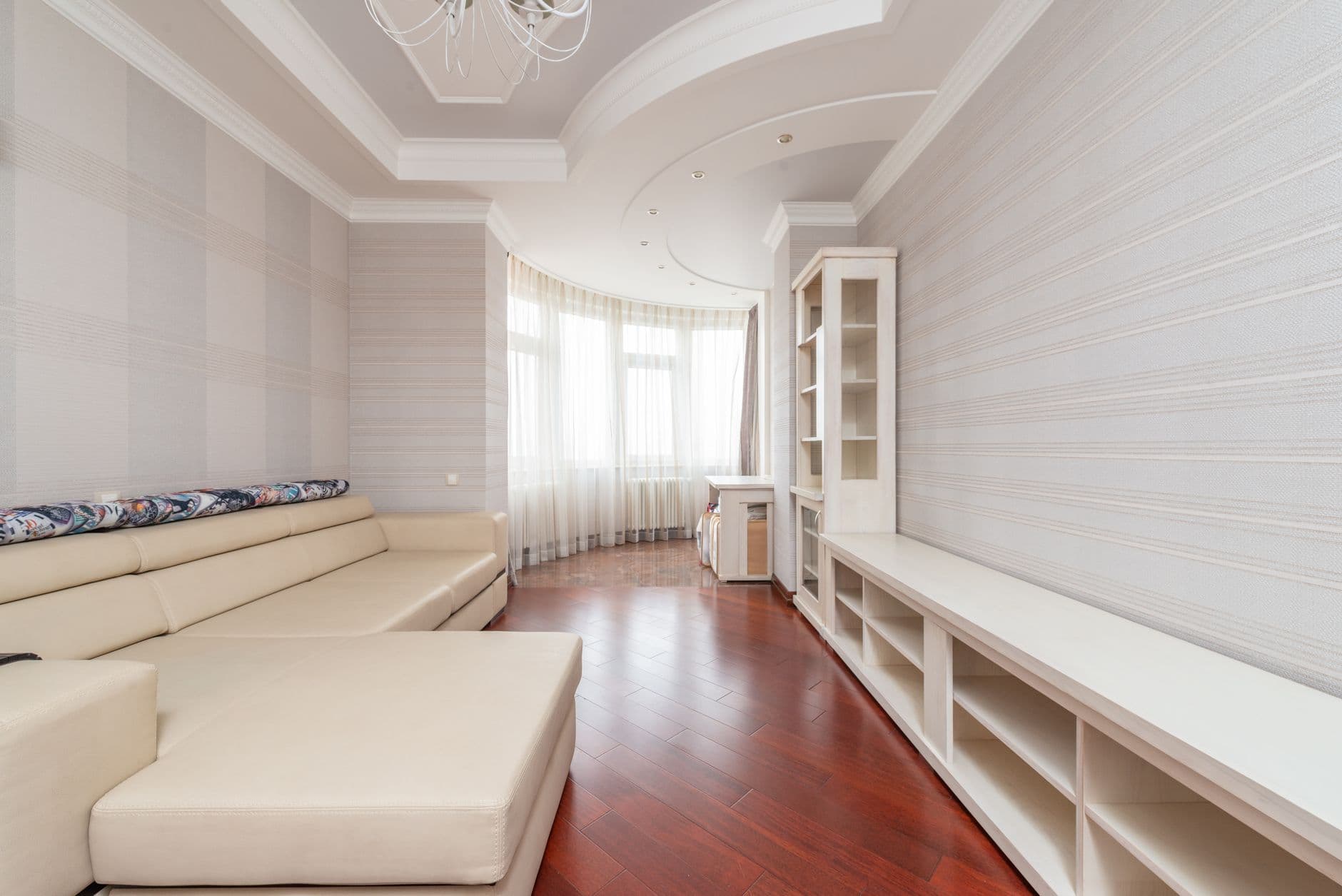
LoomLan currently lists bookcases, bookshelves, display cabinets and etageres in this collection. The tracked link opens that official collection through the approved LoomLan referral route, and Vestados may earn a commission if you buy through it. Before ordering, verify overall width, height and depth, usable shelf dimensions, shelf spacing and stated weight capacity, back-panel and frame construction, materials and finish care, door or drawer clearances, assembly requirements, anti-tip hardware and the correct fixing for your wall type, stock, doorway and stair or lift access, delivery method and the current return terms. If you choose a clearance item, LoomLan states that clearance sales are final.